Live Cell Observation System Selected for NASA-Supported Project Heading to the International Space Station
Nikon Contributes to Research on the Effects of Microgravity in Drug Discovery
TOKYO, April 7, 2026 /PRNewswire/ -- Nikon Corporation (Nikon) is pleased to announce that the live cell observation system developed by Nikon and its U.S.-based subsidiary Nikon Instruments Inc. (NII) has been selected for "research on the effects of microgravity in life sciences and drug discovery" on board the International Space Station (ISS), supported by the Center for the Advancement of Science in Space (CASIS), manager of the ISS National Laboratory. The U.S. National Aeronautics and Space Administration's (NASA) Northrop Grumman Commercial Resupply Services (CRS) 24 mission is set to launch to the space station from Cape Canaveral Space Force Station, Florida in early April 2026. On this mission, foundational operational verification will be conducted for an observational microscope system used to culture, maintain, and observe live cells and tissues.

Since the Apollo 15 mission in 1971, Nikon cameras and lenses have been used in various NASA missions and space shuttle explorations. Most recently, the Nikon Z9, the flagship model of Nikon's mirrorless camera lineup, is in use on the ISS. This high reliability and technological capability have also been demonstrated in the field of microscopy, where Nikon has a proven track record of providing microscopes for use on the ISS. In 2021, the company was selected for an ISS development support project for private companies, supported by CASIS with U.S. government grant funding. This research focuses on developing equipment that enables long-term visual analysis of cell behavior and biological tissue responses to pharmaceuticals in the limited space of the ISS experiment module. The contract for this project has been concluded between NASA and NII, with NII responsible for project management and Nikon and NII jointly responsible for development of the live cell observation system.
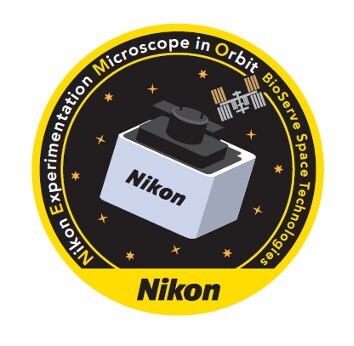
On the ISS, observations using MPS* will be conducted via the Nikon Experimentation Microscope in Orbit (NEMO), a system combining Nikon's live cell observation system which can observe and evaluate the behavior of cells and biological tissues with high precision, and a cell culture incubator and automated media perfusion system developed by BioServe Space Technologies (BioServe) in Boulder, Colorado, U.S. BioServe's system maintains an optimal environment for cells, while Nikon's live cell observation system serves as the microscope, enabling high-precision evaluation and analysis of the effects of microgravity on living organisms through observation of cell behavior and biological tissue responses in space.
Understanding the effects of gravity on biological tissues is an important area of research for accelerating human extraterrestrial activities, and is expected to potentially lead to elucidating the causes of aging phenomena and diseases in living organisms. For this reason, it is attracting attention from global life science companies, including pharmaceutical companies and biotechnology firms aiming to develop pharmaceuticals, as cutting-edge research.
Through this project, Nikon will leverage the technical advantages and insights gained to serve as a bridge connecting space and Earth, continuing to contribute to life science research and technological innovation.
*Microphysiological Systems: 3D culture systems that create an environment mimicking conditions inside living organisms. |
Logo - https://mma.prnewswire.com/media/833995/Nikon_Instruments_Logo.jpg
Photo - https://mma.prnewswire.com/media/2950892/Nikon_NEMO_Mission.jpg
 View original content:https://www.prnewswire.co.uk/news-releases/live-cell-observation-system-selected-for-nasa-supported-project-heading-to-the-international-space-station-302735836.html


